
Henrietta City Directory Shelves
Henrietta research works best when each book is treated as a named collection, not as one continuous list. Rochester Public Library Local History/Genealogy holds the core regional shelf. Its Rochester volumes begin with original bound books from 1827, and its digital files are organized by year with PDF bookmarks. The town itself was suburban or rural for much of this period, so the regional titles often carry more weight than a Rochester-only volume. Preserve the title, publisher, year, stated geography, section, and page with every find.
| Collection | Years | Where Held | Access |
|---|---|---|---|
| RPL Rochester City Directories | 1827 onward; surviving digitized material described through 1946 | Rochester Public Library and its digital collection | Bound volumes and year-organized PDFs; coverage has gaps |
| RPL house directories | 1892–1920; material moves to main volumes from 1922 | Rochester Public Library | Address and occupant route where the volume reaches the area |
| Regional and county titles | 1863–1918 examples | RPL regional-directories collection | Publisher-specific business, rural, farm, and telephone sections |
| Polk catalog and FamilySearch comparison | 1946 and 1971 | New York Heritage and FamilySearch reader | Catalog or reader access; inspect the live item before transcribing |
RPL says a missing year can mean no surviving or digitized volume was found. It does not prove that a person was absent from Henrietta. A local name may also be outside the city boundary, outside the editor’s scope, or omitted by the compiler.
Henrietta City Directories Beyond Rochester
A Rochester title is useful evidence only for the geography printed on that title. Henrietta was not part of Rochester city, so a city directory should not be read as a complete town roster. For rural and suburban research, compare the 1863 Boyd’s Rochester Directory, the 1864 Boyd’s Rochester and Brockport Directory with Monroe farmers, the 1869 Child gazetteer, the 1875 Flynn business directory, the 1884 Darrow county directory, and later business and county volumes.
The RPL regional-directories collection also identifies an Atkinson rural directory and an American Agriculturalist farm directory. Their inclusion rules differ from those of a city book. A farm, subscriber, business, or community reference may be present where an alphabetical Rochester entry is not. Retain the source role instead of turning it into a general statement about every person at an address.
Henrietta House Directory Years
The house-directory format is the strongest historical address route when its coverage reaches the place being researched. RPL describes a 15-volume Rochester House Directory. Volumes from 1892 through 1920 are arranged by address and occupants. Beginning in 1922, house-directory material appears at the back of the main directory. Name sections are alphabetical, while street and organization sections can provide other paths into the same printed record.
That structure gives a practical check on an address. Read the address section first, record the printed occupant and page, then turn to the name section only when the same volume provides it. A city address may still fall outside Henrietta’s historical geography, and a Henrietta address can use a different postal label today. The historical string should remain exactly as printed until another source supports normalization.
Note: A directory occupant, a telephone subscriber, and a recorded deed party are different source roles and should be kept distinct.
Henrietta City Directory Timeline
The surviving formats change more than once. Dating the format keeps a name search from being run against the wrong section or from making an unsupported claim about town coverage.
- 1827: RPL’s original bound Rochester city-directory volumes begin.
- 1892–1920: RPL describes separate house directories arranged by address and occupants.
- 1912: Bell’s telephone directory explicitly includes Henrietta with several nearby communities.
- 1922: House-directory material appears at the back of the main directory.
- 1946 and 1971: Polk and FamilySearch catalog records provide later dated comparison points.
These dates describe the collections, not proof that every Henrietta name or address appears in each one.
Henrietta Regional Directory Volumes
The 1912 Bell Telephone Directory is a particularly clear regional lead. RPL states that it covers Rochester, Charlotte, Henrietta, Gates, and Victor, and that the 1913–14 supplement includes a house directory. A telephone listing still represents a subscriber rather than every adult, but it can help bridge a name and a place when used with the volume’s date and section.
The Monroe County History Historic Record & Photo Search provides another historical route. Its interface offers first and last name fields, exact and sounds-like choices, keywords, a collection menu, and the ? and * wildcards. Search surname variants, road names, community names such as West Henrietta, and collection types. Save the collection title, item identifier, date, and rights or context with the result.
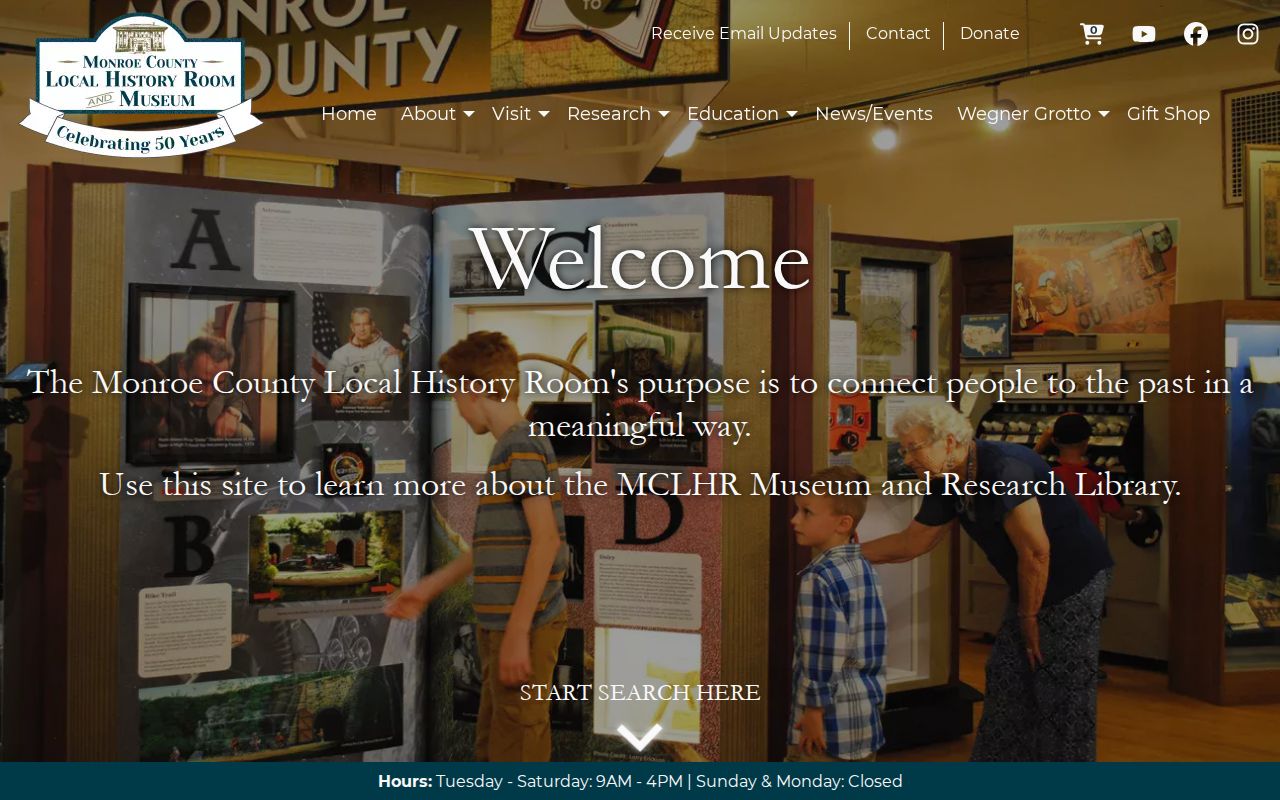
That structured historical search is useful for finding collection subjects, not for claiming a complete Henrietta resident list.
Decoding a Henrietta City Directory
Read only what the chosen page visibly supplies. A 1946 Polk catalog entry has been identified, but its page-image layout was not OCR-rendered during the research inspection. For that reason, the safest inventory records the printed form without supplying assumed symbols or family relationships. The book’s title and publisher matter as much as the name because they tell a later reader what the compiler intended to cover.
| Printed name | Copy the name exactly, including initials, suffixes, or abbreviations. |
|---|---|
| Address or place | Record the original house number, street, hamlet, or other place text. |
| Section | Identify whether the item came from a name, address, organization, business, or telephone section. |
| Year and page | Capture the volume year and page or image reference for repeatable checking. |
| Visible adjacent text | Transcribe telephone or occupation text only when it appears on the actual page. |
- Criss-cross section
- An address-ordered section that can be read by street and number, then checked against the name section.
- Householder index
- An address-focused route to occupants or household listings where the volume provides one.
- Abbreviation key
- The volume’s own explanation of its short forms. Read and preserve that key instead of expanding a mark by guesswork.
Henrietta City Directory Search Tools
RPL Local History/Genealogy is on the second floor of Rundel Memorial Library. Materials are noncirculating. Walk-ins can suit a quick question, while appointments are recommended for special collections or deeper work. Current construction limits access to some holdings, and Herald/Post-Express microfilm is offsite while digitization proceeds. Call or arrange an appointment before relying on an in-person item.
RPL also lists the 1950 census, maps, newspaper indexes, local-history files, and several database services with different access conditions. The Town Historian Notebook is another local route for papers, photographs, publications, cemetery indexes, and place context. The Town identifies the Henrietta Weekly Journal run for 1961–1987, but no online name-search interface for that run was located. Ask whether the item is indexed, digitized, offsite, or appointment-only.
The Town lists historian Tina Thompson at the Tinker Homestead, 1585 Calkins Road, Pittsford, NY 14534, with 585-359-7042 and historian@henrietta.org. Regular terms are Monday, Tuesday, and Thursday from 9:30 to 4:30, or by appointment. Bring a name variant, approximate year, street or hamlet, parcel clue, and a defined request such as a directory year, newspaper run, cemetery index, or photograph collection. The historian can identify a primary item, finding aid, or oral recollection, but those source types should not be merged.
Tracing a Henrietta Directory Household
Build a trail one source at a time. The RPL house-history worksheet uses address, former street name, map year and lot clues, directory year and occupants, assessment owner, deed parties, permits, construction details, and notes. It is a repeatable research structure, not proof that every collection includes every Henrietta address.
- Choose one volume and record its title, publisher, stated geography, year, section, and page.
- Copy the printed name and address, keeping the original spelling and place label.
- Check an adjacent directory year for a move, an address variation, or a gap.
- Pair the dated entry with a map, parcel, or recorded deed only after the address has been normalized.
- Use census, newspaper, historian, or cemetery leads as separate evidence, with their own dates and limits.
For a modern street-specific cross-check after the historical address is settled, use the Henrietta street address directory. It focuses on parcel and address records rather than historical book collections.
Henrietta Directory Collection Leads
New York Heritage’s Town of Henrietta Collection has 22 items in the 1855–1870 and 1890–1920 groupings. It includes postcards, a photo album, and material connected with Mary Elizabeth Kirby and West Henrietta Baptist Church. Its narrow scope is a strength for community context, but a collection subject is not automatically a resident for every date.
The digitized 1946 Polk catalog is another useful comparison point. It identifies its title, year, and hosting collection, but an actual Henrietta or West Henrietta page still needs to be checked and transcribed from the source image. Preserve both the catalog record and the page reference if one is located.
The County Historian’s house-research method connects present-owner deed research with bought-from and sold-to names, directories, and maps. That sequence helps explain why a name may appear in one source role and not another.
New York Heritage’s 1946 Polk catalog record is the source for the digitized collection image below.
The catalog confirms a collection lead, while the uninspected page layout remains a research gap rather than a basis for assumed entry fields.
Henrietta Directory Gaps and Access
Directory absence is not a final answer. RPL identifies several reasons a person can be missing: the person may have been a child, lacked a fixed address, lived outside the city boundary, fallen beyond the volume’s scope, or been missed by the compiler. Surviving and digitized years are also not continuous. FamilySearch’s 1971 Rochester Monroe County catalog offers a later comparison, but live reader access and image permissions should be checked before use.
Henrietta’s mailing labels add a second boundary issue. Town records use Henrietta, West Henrietta, and Rochester postal lines, while the legal municipality remains the town. Preserve the original directory geography and postal wording, then verify a modern parcel separately if the goal is to connect an older place to a current location.
Note: Record each negative search with the volume year, publisher, title, place coverage, and access condition before changing the spelling or geography.